How to Create the Perfect Basement Home Office in London
A basement home office gives you the separation and quiet you need to work effectively from home. Design, costs and what to consider from London basement specialists.
How to Create the Perfect Basement Home Office in London
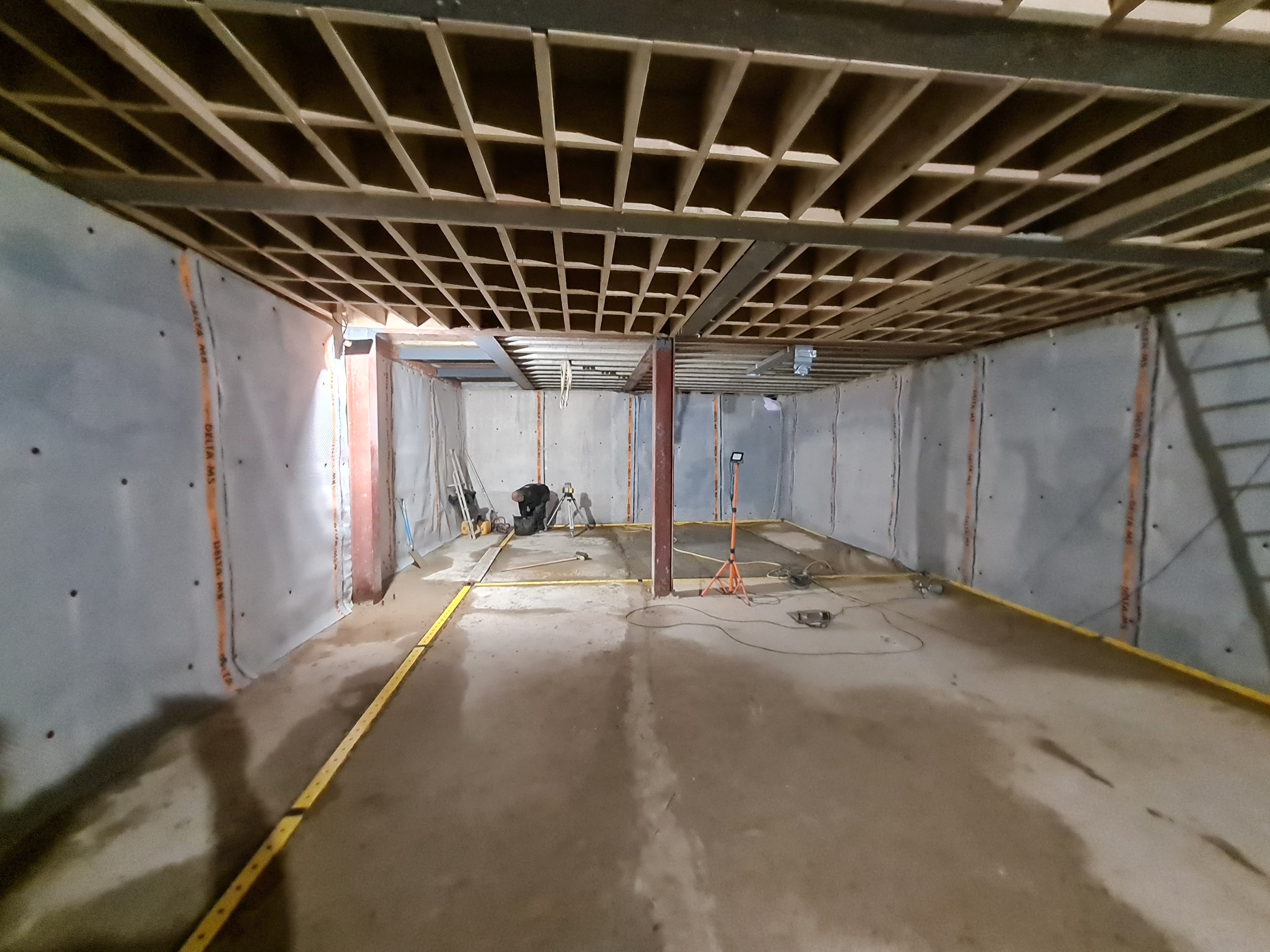
Working from home has become the norm for millions of Londoners. But working from a spare bedroom, a corner of the kitchen or a dining table is not the same as having a dedicated, professional workspace. A basement home office solves this problem definitively — giving you a separate, quiet, well-equipped space that is genuinely conducive to focused work.
Here is how to design and build one that really works.
Why a Basement Is Ideal for a Home Office
The below-ground location that makes basements challenging for some uses makes them ideal for a home office. The surrounding earth provides natural thermal mass, keeping the space cool in summer and warm in winter. The separation from the main living areas of the house means you are genuinely away from household noise and distractions. And the fact that you have to go downstairs to get to your office creates a psychological separation between work and home life that is genuinely valuable.
Getting the Lighting Right
Natural light is the biggest challenge in a basement home office. Working in a poorly lit space causes eye strain and fatigue, and a dark basement can feel oppressive rather than productive.
The solution is a combination of natural and artificial light. A lightwell — an excavated area outside the basement window — brings natural light into the space and can be surprisingly effective even in a north-facing basement. Roof lights or glass floors above the basement can also bring light down from above.
Artificial lighting should be layered: ambient lighting for general illumination, task lighting for the desk, and accent lighting to prevent the space feeling flat. LED lighting with a colour temperature of 4000K to 5000K (cool white) is ideal for a working environment.
Ventilation and Air Quality
A basement home office must have adequate ventilation. Without it, CO2 levels rise as you breathe, causing fatigue and reduced concentration — exactly the opposite of what you want from a workspace.
Mechanical ventilation with heat recovery (MVHR) is the best solution for a basement office. It provides a continuous supply of fresh air while recovering heat from the outgoing stale air, keeping the space comfortable without wasting energy. A well-specified MVHR system will also filter incoming air, which is particularly valuable in London where outdoor air quality can be poor.
Soundproofing
One of the main advantages of a basement office is separation from household noise. But sound travels both ways — you may also want to prevent noise from your office (calls, music, keyboard noise) travelling upstairs.
Acoustic treatment in a basement office typically includes acoustic insulation in the ceiling, acoustic plasterboard, resilient bars to decouple the ceiling from the structure above, and acoustic flooring. The level of treatment required depends on how much sound isolation you need.
Connectivity
A basement home office needs fast, reliable internet. Running a dedicated ethernet cable from your router to the basement is the most reliable solution — Wi-Fi signals can be weakened by the concrete structure. Plan the cable route during construction, before walls are plastered.
Also plan for adequate power sockets — more than you think you need. A dedicated circuit for the office, separate from the rest of the house, is worth considering if you run power-hungry equipment.
Ergonomics and Comfort
A basement office where you spend eight hours a day needs to be genuinely comfortable. Ceiling height is important — a minimum of 2.4 metres is recommended, and 2.7 metres or more makes the space feel much more generous. Floor-to-ceiling height is determined during the construction phase, so get this right from the start.
Heating should be responsive and controllable independently from the rest of the house. Underfloor heating is ideal for a basement office — it provides even, comfortable warmth without taking up wall space or creating draughts.
What Does a Basement Home Office Cost?
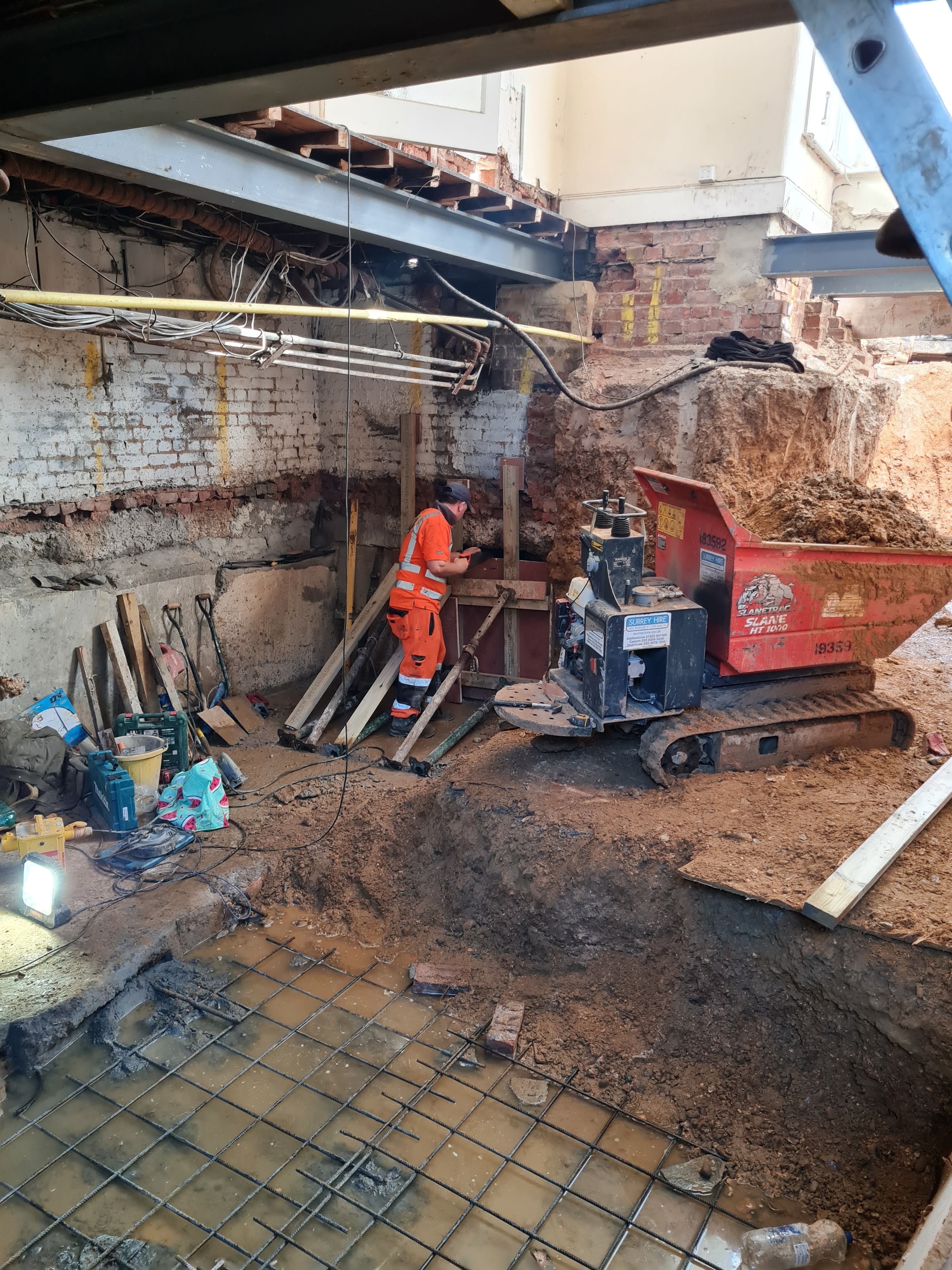
The structural shell and waterproofing for a basement home office of around 20 to 30 square metres typically costs £60,000 to £120,000. Fit-out to a good standard — including lighting, ventilation, flooring, plastering and decoration — adds £15,000 to £30,000. A high-specification fit-out with bespoke joinery, acoustic treatment and premium finishes can cost considerably more.
Start with a Free Site Visit
If you are considering a basement home office, the first step is a free site visit from our team. We will assess the feasibility, discuss your requirements and provide a no-obligation quote. Call 07405 046475 or 020 8087 4829.
Explore Topics
Written by
Making Space Below Ground
Content creator and writer sharing insights and stories.